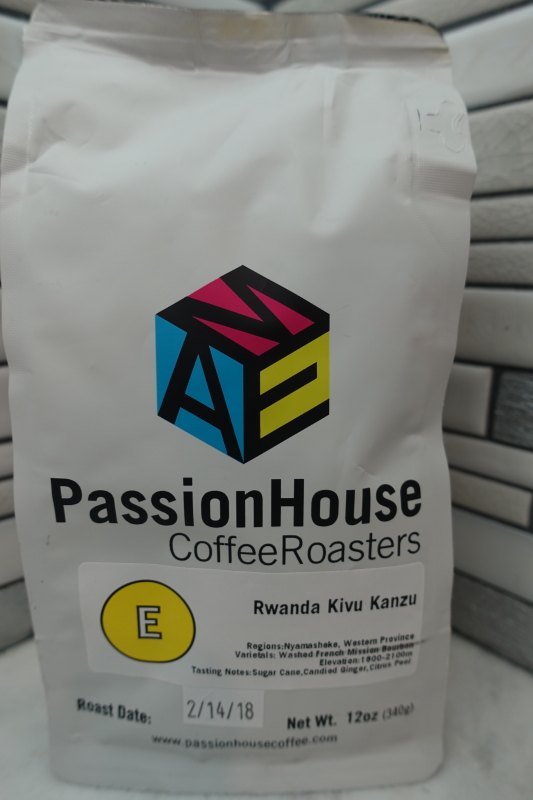
Passion House Coffee Roasters

This months Angel’s Cup coffee subscription service comes from Passion House Coffee Roasters.  The beans come from Rwanda’s Lake Kivu Kanza.  As I open the bag, an aroma of licorice, cherry, and hints of raisin(?) greets me.  I don’t think I’ve ever tasted beans from Rwanda.  So this bag will be a nice change to see if a different African region will have a slightly different profile.

DSC01923

After grinding the beans, the licorice aroma is much stronger and a cocoa aroma emerges as well.  This smell is actually pretty addicting.  I caught myself sniffing the ground beans a couple times to enjoy that aroma.

Brewing my latte, the licorice and chocolate flavor becomes the dominant taste in the first few sips.  I also taste some cherry and raisins as well.  Surprisingly, I don’t get that strong earthy nutty taste typical of many of the previous coffee beans I’ve gotten.  However, I do taste this nutty flavor in the aftertaste.  This is an extremely smooth coffee that drinks very quickly.

The #MeToo Movement

I’ve always wondered about why the #MeToo movement suddenly exploded in the last  two years and not years ago?  Growing up, I’ve heard or read about stories here and there about the sexual harassment or sexual misconduct by famous, rich male celebrities on unsuspecting females.  Yet nothing usually came out of it.

Do you remember Kobe Bryant in Colorado and his sexual assault case?  The case was dismissed later and settled out of court.  Kobe never admitted to doing anything wrong other than consensual sex.  It’s good to be rich and famous.  When the accuser’s name  was publicly known, she received death threats.  Does this sound familiar?  It’s the modus operandi that accusers prior to #MeToo would face including tactics such as smear campaigns, defamation campaigns, intimidation, threats, etc.  In short, no one believed the accusers (rape victim) and everyone believed the accused (rapist).  I always chalked it up to “innocent until proven guilty” for the accused (the rapist).  But I also wondered, why didn’t people believe the rape victim (the accuser)?  Ironically, if a kid accused an adult of rape, everyone believed the kid.  Kind of makes you wonder doesn’t it?

Anyways, a relatively new Hidden Brain podcasts sheds some light into this cultural phenomenon of #MeToo.  It’s a fascinating listen.


https://www.npr.org/2018/02/05/582698111/the-psychological-forces-behind-a-cultural-reckoning-understanding-metoo

Scam City

There’s this TV show called Scam City that’s on Netflix.  The premise is pretty noble.  The host goes to different famous world cities and search for the different scams that go on in that city ranging from fake “authentic” goods to pickpockets to taxi driver kidnappings and even prostitution.  The shows does all this in an attempt to make potential tourists who are watching at home aware of the disreputable scams in the city.  It turns out that many of the show’s scams are found in every city… 3 card monte, fake authentic goods, pick pockets, “friendly bars” and the list can go on.

Although I’m no expert, I have had my fair share of traveling.  I think the culture of the country and/or city is also a big part of whether or not people will get scammed/hustled.  As a traveler there are certain things to be aware.  Pickpocket is probably the number one concern.  There’s not much a traveler can do without money, without credit cards and potentially without identification (ie Passport) too.  Being kidnapped is also a concern but I think the likelihood is much less in more touristy locations.  Plus with easy access to the Internet, using GPS and Google maps should always be a given to ensure the taxi is going to the correct direction.  In general being aware of the surrounding is important for staying safe.  So… “Don’t walk down that dark alley” or “Don’t talk to strangers” generally works in your favor.   Keep in mind hustlers are trying to relieve your wallet of some money as quickly and as easily as possible.  Making it hard for them is never in their benefit.

Apparently though, some of the episodes are not without controversy per the wiki entry on Prague and Amsterdam.  Is Scam City scamming the TV audience!?

Anyways, watching this show leads me to a few questions…

  1. Why would anyone want to go to these cities now?
  2. Why does the show seem to portray certain non 1st world cities in a much more negative light?  The Mumbai and New Delhi episodes make these two cities out to be pretty bad as does the Bangkok episode.
  3. I sometimes feel like they are actively looking for scams that happen.  And that tourists would have to be really really stupid to fall for some of these tricks.  Maybe it’s to build suspense up similar to how ABC’s The Bachelor and the contrived storylines.
  4. Pickpockets are still the world’s most dangerous petty thieves.  Some of the pickpockets on the show are really good and have great finger/hand dexterity.  The Jerusalem Mount Olive pickpocket scene was pretty interesting.  He used slight of hand and a common magic trick of directing attention away from the wallet.


Ideally, the tourist needs to be aware of the hustle and take whatever precautions needed to minimize the hustle.  Ultimately as a tourist, staying safe is the ultimate priority to enjoy the city.  Happy traveling!

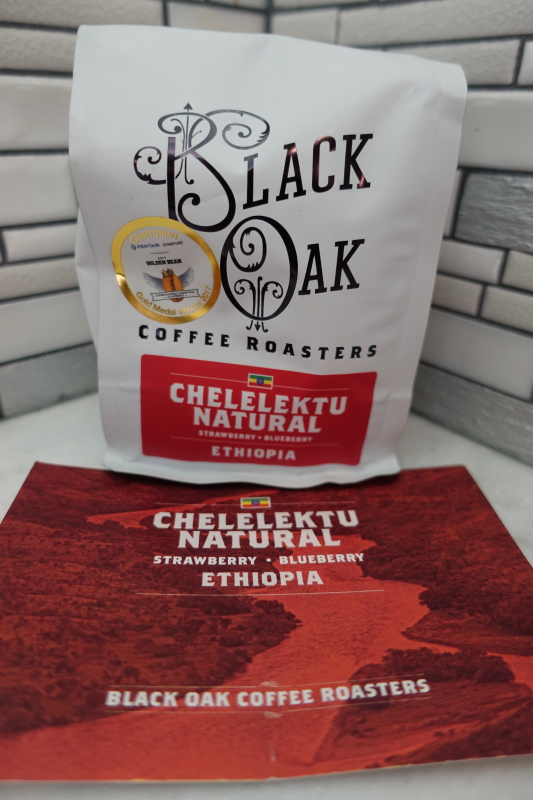
Black Oak Coffee Roasters

This month’s Angels Cup comes from Black Oak Coffee Roasters.  The specific beans come from Ethiopia’s Gedeo/Yirgacheffe region from a farm called Chelelektu Mill.  I’ve previously had tasted beans from this region as well as beans from the Sidamo region of Ethiopia.

DSC00005

Opening the bag of beans rewards me with a sudden rush of toffee, berry, nutty and earthy aromas.  After grinding, the nutty berry aromas are accentuated as I transfer the ground beans into the Aeropress.  I was sniffing the container holding the ground beans between each transfer into the Aeropress.

The latte was exceptionally smooth.  I tasted the toffee and berry flavors with subtle strawberry aftertaste at times.  The earthy and nutty aromas linger in the aftertaste as well too.

The Russian Interference of 2016

I feel like the 2016 election would be a great backdrop for a new spy movie genre.


So the Mueller indictment charged 13 Russian nationals and 3 Russian organizations with conspiracy to defraud the US.  Listening to the various news sources and podcasts, these Russians released propaganda in support of Trump and against Clinton in an effort to influence the Presidential election.  In fact, the propaganda actually sounds very familiar to what a Political Action Committee (PAC) does when a PAC tries to influence elections too.

Which got me thinking… what’s the difference?  After some Internet research, a Newseek article described why the Russian propaganda to influence the elections is illegal.  A federal law found in regulation 110.20 “prohibits any foreign national from contributing, donating or spending funds in connection with any federal, state, or local election in the United States, either directly or indirectly.”  Another law also requires foreign “agents” to register with the US in an attempt to minimize any influence from non-American sources in elections.  What’s interesting is that US has also meddled in the political affairs of other nations too according to a a New York Times opinion article.  But I actually already knew that.  In all honesty, I was amused at the Russian interference.  It’s like US getting a taste of their own medicine.  But at the same time, I understand why US will want to try to influence foreign elections in order to have a more pro-American official leading the nation.  It’s the same reason Russia did what they did in 2016.

When you think about all that’s happened during the 2016 election, what’s disturbing is that Russian misinformation became the defacto truth creating even more divided America.  There was never any questioning of the misinformation.  The proliferation of #fakenews and #alternativefacts by even those in the Trump campaign is disturbing.  Do you remember when Kellyanne Conway termed the coin “Alternative Facts” for Sean Spicer’s “biggest audience to witness an inauguration. Period!“?  Compare that to these videos (herehere) of what the National Mall looked like from the previous President.  And then with #fakenews, incidents like Pizzagate makes you wonder why people aren’t thinking for themselves.


Homo economicus?

Recently, I had this moment of enlightenment as to why I am drawn to behavioral economics and podcasts like Marketplace and Freakonomics.  This goes back to high school where I was struggling to understand macroeconomics and microeconomics principles in the Economics elective I chose to take as a senior.

Why was I struggling? It boils down to the assumptions about related to Homo economicus which were that humans are portrayed as acting rationally, with little self interest to achieve a specific goal.  Sure I understand this concept now years later.  But seriously in high school, I was super confused.  I couldn’t grasp the idea that microeconomics is based off individual’s rational decisions.  And since macroeconomics is built on microeconomics foundation, understanding economics in general was difficult.  I questioned the very foundation of microeconomics!  What I knew at the time is that humans don’t always act rationally.  Humans will make decisions considering both the most rational choice as well as their own self interests.  And that was the world view that I had at the time.  The questioning clearly affected my academic performances.

Good thing there were two psychologists who started questioning this supposed rationality of Homo economicus.  These psychologist changed economics when they won a Nobel prize in 2002.  Technically only Kahneman won the Nobel Memorial Prize in Economic Sciences as the other collaborator had died.  But their work spawned a new field of economics called Behavioral economics.  More recently in 2017, Richard Thaler, also an influential behavioral economist, won the Nobel prizes for his research work.  The work done these academics in behavioral economics has had a bigger personal impact in people’s lives than the rational Homo economicus.


As for my class, I ultimately ended up just memorizing everything.  Was that the most rational thing to do?  Yes… probably… if only to get an A.  Clearly behavioral economics hadn’t quite yet made their way into high school economics textbooks.


Breaking Bad

Netflix has a neat feature that allows users to download a limited number of episodes of selected shows for offline viewing. I took advantage of this and downloaded AMC’s Breaking Bad. Netflix has all 5 seasons to watch and more importantly for download.

On a recent trip to Asia, I started watching these episodes and downloading them at the hotel wifi for future offline watching. I finished the final episode before returning to US.

My thoughts on this show is mixed. I thought the first 3 seasons went very well. The final 2 seasons seems to be dragging out a “good thing” by meandering through these plausible storylines. The character development was varied depending on the character throughout the seasons.

Walter White’s transition from a high school chemistry teacher into a meth cook is an interesting study into his psychology. As the series progresses, his psychological state begins to drastically change as his demeanor and ambitions grows bigger while fear and paranoia grips his every day life. He has a quote “I feel alive” that sums up his adrenaline filled days of meth cooking, conspiracy and thug/underworld life (for lack of a better word). As the series progresses his ambitions start to get the better of him. Mike towards the end of the show pointed out how good it could have been if it were not for his “pride.” As correct as Mike is, I think it was more than pride that fed into his hubris and eventual downfall.

Jesse Pinkman could have been developed even further. His character doesn’t grow nearly as much as White. Throughout every season, I found him going from one emo state to another emo state. He feels like a tragic hero that the writers used to dump all the horrible results on while Walter White gets away with just about everything. Ultimately, he was not ready to be the partner White needed him to be. He never was developed to be as ruthless as White but more of a sniveling underling that was in way over his head.

Although this show is 10 years old, it’s worth watching all 5 seasons. Just be prepared for some exasperating moments.

Blockchain Migration?

You’ve heard of “Block Chain Migration” in the news recently.

But, can technology utilize a “Blockchain” and confirm immigration status? Once the blockchain has confirmed/validated, you’re granted legal status!

Do you think this is possible?

Planet Money’s The Indicator

Planet Money is one of my favorite podcasts that I listen to.  They talk about money, economics and financial related news tidbits.  They recently spun off a mini-podcast called The Indicator which does a deep dive into one particular aspect in Planet Money that they think deserves a more thorough analysis.  Recently they put out a podcast talking about the Beige Report (wiki).  I had no idea there was such a report that is put out by the Federal Reserve.  Nonetheless, the reporters at Planet Money did their best to humor and enlighten the significance of the report with three snippets.  The full transcript of the snippet can be found here.  Below is the snippet that I found most interesting.

SMITH: And Boston had this great aha moment for us that they wrote about in “The Beige Book” which might explain why wages have been rising so slowly even though unemployment is so low across the nation and in Boston.

VANEK SMITH: And this is a big economic mystery that everybody’s talking about right now. I mean, unemployment’s so low people are trying to hire like crazy, and that could help be explained by this moment in “The Beige Book.” They’re talking about a manufacturing company. And they say, quote, “another industrial firm had 20 unfilled openings in a plant with a hundred employees and said they were making up for it with significant overtime. When asked why they didn’t increase wages to fill the openings, the contact said they would have to pay all the existing workers more, which would be uneconomic.”

SMITH: So they’re making everybody work overtime…

VANEK SMITH: Yeah.

SMITH: …Because they’re afraid of giving everyone a raise. So they can’t raise wages on just the new people that they desperately need.

VANEK SMITH: Yes, exactly.

SMITH: Which is fascinating because, I mean, this is something that data doesn’t often capture. We like to think that there’s this direct relationship between wages and employment. But of course there’s all these weird things in the economy – contracts and special cases…

VANEK SMITH: And office politics.

SMITH: …And office politics that just makes it hard to give new people raises.


https://www.npr.org/templates/transcript/transcript.php?storyId=578954679


After hearing the episode, I’m a bit shocked at the rationale.  Why would hiring new workers who would have higher wages force a company to give everyone a raise?  That reasoning doesn’t make sense to me.  And more importantly, wouldn’t that just mean the wages you’re paying now are actually not high enough?


Master of None

Aziz Ansari (wiki) has recently been in the news as part of the #MeToo (wiki) movement.  Before this event, he’s originally a stand up comedian who transitioned into TV show fame.  Some of his stand up routines on Netflix (here, here) are pretty funny.  I’ve read his book Modern Romance which held a few hilarious dating anecdotes that are relatable to the singles dating life.

Master of None is his latest TV show on Netflix.  Ansari recently won a Golden Globe for Best Actor in TV Series, Musical or Comedy.  As one of the series on my “To Watch” list, I started watching sometime last month and finished watching it yesterday.  As I watched the show, I began to realize that I was more interested in the dating and relationship stories between Rachel and Francesca.  I think what makes this such a great show is the relatability of the characters and their backstories.  The Thanksgiving episode is a great example and is one of the better episodes from both seasons.  It’s well written and well directed and shows the evolution of Denise and her family’s acceptance of Denise as a lesbian.

Towards the end of season 2, I related to Ansari’s character of how he felt and with his emotions with relationships.  I understood just how Ansari’s character felt as I had felt the same way many times in the past.  That physical pain and heartache in the chest, the constant thinking in my own head space, and the irrational decisions were all relatable emotions and attributes.  The last two episodes of season 2 made me reflect on my emotional, physical and rational state when I was experiencing these emotions.  Watching these episodes made me sad that the relationships never worked out.  Unlike the happy ending in season 2, the potential for a positive relationship wasn’t even an option in my case.

This show is worth watching.  The cast and storytelling are relatable in this modern day.