FELIX!

For some time, I’ve been debating on “changing the brand” (if you could call it a brand) away from Eureka!  It was originally supposed to be a food blog back in the day.  So for me the idea of Eureka! was tied to the California state motto of “I found it!”  Clearly a clever whimsical play on words and meaning on finding food.  The state motto is related to the California Gold Rush era whereas traditionally the term Eureka! is attributed to the anecdote of Archimedes discovering the concept liquid volume displacement of a solid.

But it’s evolved into a personal blog of mine where I share my random thoughts, coffee addiction, and any thing I find either interesting, outrageous or thought provoking.  I also use all my social media accounts in this fashion as well.  And because of this evolution, the idea of Eureka! didn’t really make sense anymore.  So I spent quite a long time thinking of a clever blog name but none of the ideas really really reflected the type of blogging I was doing.  But do you know what did make sense?  FELIX!  Yea… original…

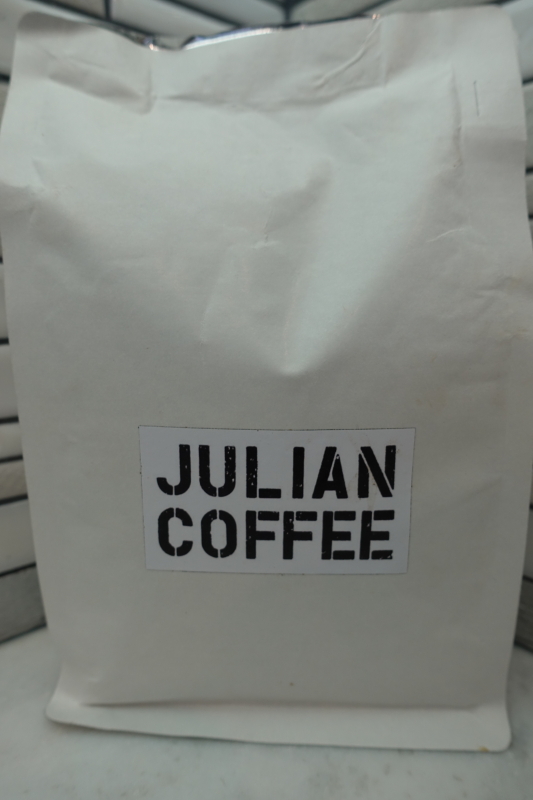
Julian Coffee

Some time ago, there was a Kickstarter campaign where supporting the campaign was rewarded with a bag of roasted coffee.  Julian Coffee, the creator’s of the campaign, is trying to “Make Puerto Rican Coffee Great Again” to use a bad moniker.  From the story, they already had production and operations in Puerto Rico and wanted to provide a living wage to the workers as well as to enter the US market through the campaign.  So why not?

Coffee00070

I don’t think I’ve had beans from Puerto Rico.   The aroma has an earthy, ashy, and peanut butter smell that reminds me of Kona coffee beans roasted in Hawaii.  Making my latte, the first sip had a strong ashy, roated flavor that it really did remind me of the lattes from Kona coffee beans.  After that first sip, each subsequent sip had a pleasant nutty flavor.  I think there might have been hints of chocolate too.  To be honest, I actually enjoyed this coffee as it tasted different from the last beans.  I think it’s because of the lack of berry and fruity flavors.  I’m definitely going to buy another bag when I can if anything to at least continue supporting their cause to provide a living wage to the workers.

Asian Enough: Kamala Harris

I posted sometime ago about LA Times’ Asian Enough podcast.  This past week they interviewed California’s US Senator Kamala Harris.  For those that might not know, Senator Harris is half Asian (Indian) and half Black (Jamaican).  She was also one of the many Democratic candidates for the 2020 Presidential race.

This podcast gives great insight into Senator Harris as a person as opposed to a presidential candidate or senator.  It’s worth listening to.

https://www.latimes.com/california/story/2020-03-10/asian-enough-podcast


Use of Masks

Kudos to the California government on the proclamation requiring residents to wear face masks in public.  Masks have been shown to minimize the transmission probability down to 1.5%.  Unfortunately, the general anti-mask populace doesn’t seem to really understand the depth of the problem and are only thinking of themselves and their own livelihood.

One of the challenges with COVID-19 is the fact that people could be infected with COVID-19 without ever getting sick or displaying symptoms.  These are known as asymptomatic carriers.  Furthermore, another challenge is the fact that you could still be infecting others before displaying any of the COVID-19 symptoms.  Both of these reasons are some of the factors as to why COVID-19 very difficult to deal with.  Think about it… you are infected without realizing you’re infected.  And you’re infecting other people all while you have no idea that you’ve been infected.  That’s scary.

One of the effective ways to minimize transmission rates is to not see anyone.  These were the stay at home orders issued by most states.  Another way to minimize transmission rate is to wear masks.  The picture below represents approximate transmission rates for different situations.  Since staying at home full time is not possible (people need to shop for groceries, check up on family living nearby, etc), wearing mask is also another effective way to minimize the transmission rate.

Since a person infected with COVID-19 might not even know they’re infected, wearing a masks not only protects you from getting infected by others, but it also protects others from getting infected by you!  Wearing masks protects everyone whether you know it or not.  An ounce of prevention (wearing masks) is worth a pound of cure (becoming infected and requiring hospitalization)!

So… Wear masks. Save lives.

COVID19 Transmission

Temple Coffee Roasters

June’s Trade Coffee (referral link) comes from Temple Coffee Roasters.  I haven’t had that many beans from Peru and they smell amazing.  The beans are from a region called Cajamarca.

Coffee00069

Making my latte, the initial sip had nutty, citrus, and floral flavors.  Taking the second sip, I start getting hints of sweet chocolate and peanuts/hazelnuts.  Every sip afterwards was enjoyable with various hints of sweet, honey, and fruity flavors.  I definitely enjoyed the latte and made myself another cup later that day.

Re: Atlanta

You would think with ALL THE PROTEST going on that the police would assume a measured approach to any situations that require police assistance. You would think…

Jimmy O Yang Comedy Special

With the success of Crazy Rich Asians (great movie) and Silicon Valley (I haven’t seen), I’ve known Jimmy O Yang more as a comedian though I haven’t seen any of his stand ups on TV/stream platforms.  Many of his other Asian peers (Ronny Chieng, Ali Wong, Ken Jeong, Russel Peters, Aziz Ansari) seems to have broken into the streaming and now I’m glad to see him also have is special but on Amazon.  Go watch it… it’s funny and is pretty indicative of growing up Asian American.


John Oliver’s Last Week Tonight

I haven’t heard John Oliver swear so much in an episode until this one.

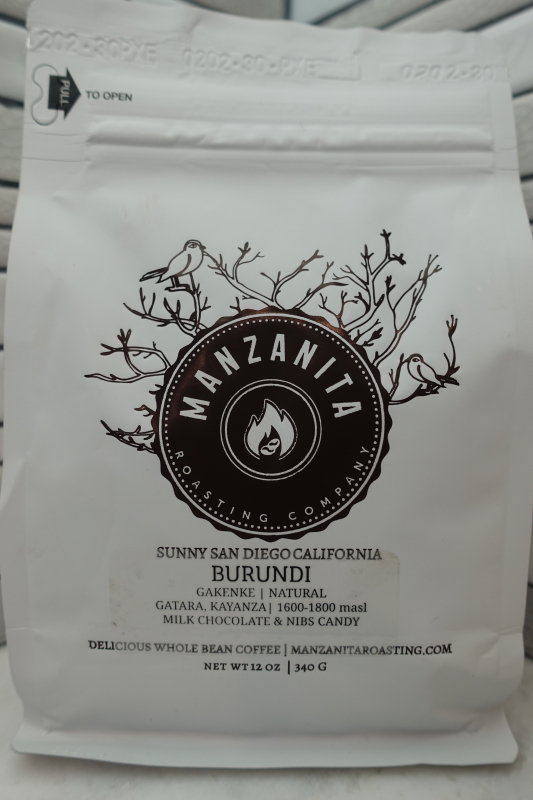
Manzanita Roasting Company

June’s Angels Cup are Burundi beans from Manzanita Roasting Company.  One benefit of these monthly coffee bags is that I’m starting to learn some of the locations of these countries in Africa.  Although it is a small region of Kenya, Ethiopia, Rwanda and Burundi. Most of the beans that have arrived originate from Ethiopia.

Coffee00068

The beans release a faint floral and fruity aroma upon opening the bag.  Making my latte, I taste this subtle cocoa flavor that changes to this wonder earthy nutty flavor at the back of my tongue.  What’s interesting is with each sip, that cocoa flavor becomes more intense.  The flavor is similar to that lingering taste after eating chocolate and peanut butter (like a Reese’s Peanut Butter Cup).

Barack Obama’s Response

Here is Barack Obama’s Medium post (found here) talking about the recent nationwide protest.  I agree with President Obama and have always believed in the need to start wielding political power in order to affect change.  Without political power, the status quo will always remain for those in power.

https://medium.com/@BarackObama/how-to-make-this-moment-the-turning-point-for-real-change-9fa209806067

View at Medium.com

As millions of people across the country take to the streets and raise their voices in response to the killing of George Floyd and the ongoing problem of unequal justice, many people have reached out asking how we can sustain momentum to bring about real change.

Ultimately, it’s going to be up to a new generation of activists to shape strategies that best fit the times. But I believe there are some basic lessons to draw from past efforts that are worth remembering.

First, the waves of protests across the country represent a genuine and legitimate frustration over a decades-long failure to reform police practices and the broader criminal justice system in the United States. The overwhelming majority of participants have been peaceful, courageous, responsible, and inspiring. They deserve our respect and support, not condemnation — something that police in cities like Camden and Flint have commendably understood.

On the other hand, the small minority of folks who’ve resorted to violence in various forms, whether out of genuine anger or mere opportunism, are putting innocent people at risk, compounding the destruction of neighborhoods that are often already short on services and investment and detracting from the larger cause. I saw an elderly black woman being interviewed today in tears because the only grocery store in her neighborhood had been trashed. If history is any guide, that store may take years to come back. So let’s not excuse violence, or rationalize it, or participate in it. If we want our criminal justice system, and American society at large, to operate on a higher ethical code, then we have to model that code ourselves.

Second, I’ve heard some suggest that the recurrent problem of racial bias in our criminal justice system proves that only protests and direct action can bring about change, and that voting and participation in electoral politics is a waste of time. I couldn’t disagree more. The point of protest is to raise public awareness, to put a spotlight on injustice, and to make the powers that be uncomfortable; in fact, throughout American history, it’s often only been in response to protests and civil disobedience that the political system has even paid attention to marginalized communities. But eventually, aspirations have to be translated into specific laws and institutional practices — and in a democracy, that only happens when we elect government officials who are responsive to our demands.

Moreover, it’s important for us to understand which levels of government have the biggest impact on our criminal justice system and police practices. When we think about politics, a lot of us focus only on the presidency and the federal government. And yes, we should be fighting to make sure that we have a president, a Congress, a U.S. Justice Department, and a federal judiciary that actually recognize the ongoing, corrosive role that racism plays in our society and want to do something about it. But the elected officials who matter most in reforming police departments and the criminal justice system work at the state and local levels.

It’s mayors and county executives that appoint most police chiefs and negotiate collective bargaining agreements with police unions. It’s district attorneys and state’s attorneys that decide whether or not to investigate and ultimately charge those involved in police misconduct. Those are all elected positions. In some places, police review boards with the power to monitor police conduct are elected as well. Unfortunately, voter turnout in these local races is usually pitifully low, especially among young people — which makes no sense given the direct impact these offices have on social justice issues, not to mention the fact that who wins and who loses those seats is often determined by just a few thousand, or even a few hundred, votes.

So the bottom line is this: if we want to bring about real change, then the choice isn’t between protest and politics. We have to do both. We have to mobilize to raise awareness, and we have to organize and cast our ballots to make sure that we elect candidates who will act on reform.

Finally, the more specific we can make demands for criminal justice and police reform, the harder it will be for elected officials to just offer lip service to the cause and then fall back into business as usual once protests have gone away. The content of that reform agenda will be different for various communities. A big city may need one set of reforms; a rural community may need another. Some agencies will require wholesale rehabilitation; others should make minor improvements. Every law enforcement agency should have clear policies, including an independent body that conducts investigations of alleged misconduct. Tailoring reforms for each community will require local activists and organizations to do their research and educate fellow citizens in their community on what strategies work best.

But as a starting point, here’s a report and toolkit developed by the Leadership Conference on Civil and Human Rights and based on the work of the Task Force on 21st Century Policing that I formed when I was in the White House. And if you’re interested in taking concrete action, we’ve also created a dedicated site at the Obama Foundation to aggregate and direct you to useful resources and organizations who’ve been fighting the good fight at the local and national levels for years.

I recognize that these past few months have been hard and dispiriting — that the fear, sorrow, uncertainty, and hardship of a pandemic have been compounded by tragic reminders that prejudice and inequality still shape so much of American life. But watching the heightened activism of young people in recent weeks, of every race and every station, makes me hopeful. If, going forward, we can channel our justifiable anger into peaceful, sustained, and effective action, then this moment can be a real turning point in our nation’s long journey to live up to our highest ideals.

Let’s get to work.

View at Medium.com