Yes Plz Coffee

So sometime ago, I had kickstarted a coffee roaster called Yes Plz that offered an initial subscription service.  This was the first bag that was sent.  I got a 2nd bag shortly afterwards.  I subscribed for a total of 3 bags within 3 months.

Coffee00030

Honestly, this debut release was very subtle.  The aromas from the bag had subtle floral, buttery and cocoa hints.  Grinding these beans, I’m very surprised the subtlety of these aromas as they seemed to intermingle in the ground beans.  Taking a big whiff of the ground beans, all I get are chocolate aromas.

But after making my latte, the chocolate aromas disappear leaving this buttery, berry, and toffee tasting drink.  I don’t get a significant aftertaste either.  It’s extremely smooth and easy to drink.


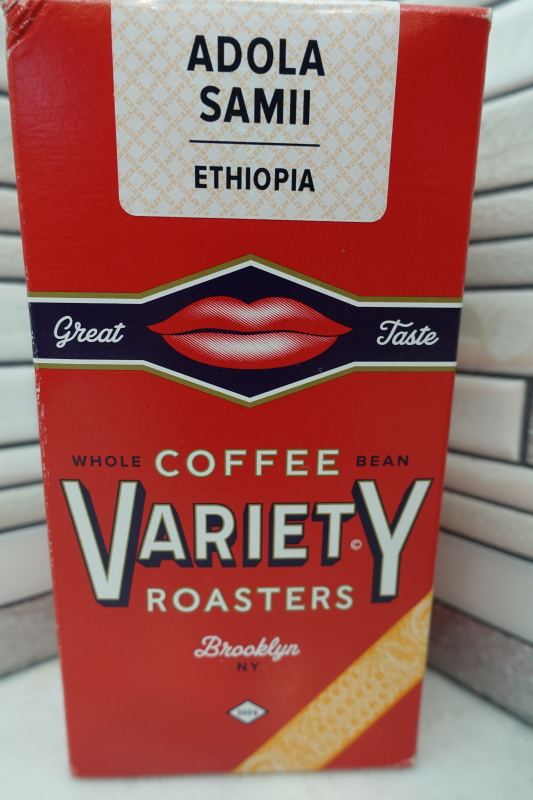
Variety Coffee Roaster

December’s Angel’s Cup came really early… before Thanksgiving.   The timing couldn’t have been better because I had just finished the previous Angel’s Cup beans the day before. Win win!  December’s beans comes from Variety Coffee Roaster.  Angel’s Cup had previously sent me beans from this roaster a very long time ago.

Coffee00029

The beans today are from Ethiopia’s Guji region.  Opening the box and then the bag, I’m greeted with aromas of dried peaches and dried berries.  After making my latte, the first sip was very smooth.  I tasted berries and peaches.  There was very little chocolate, nutty and toffee flavor.  That lack of chocolate is pretty surprising to me.  The lack of flavors are much more unique than beans from other roasters.  Many of the previous Ethiopian beans have hints of chocolate and nuts or a very strong toffee flavor taste. So I’m not sure why this so different from some of the other roasters.

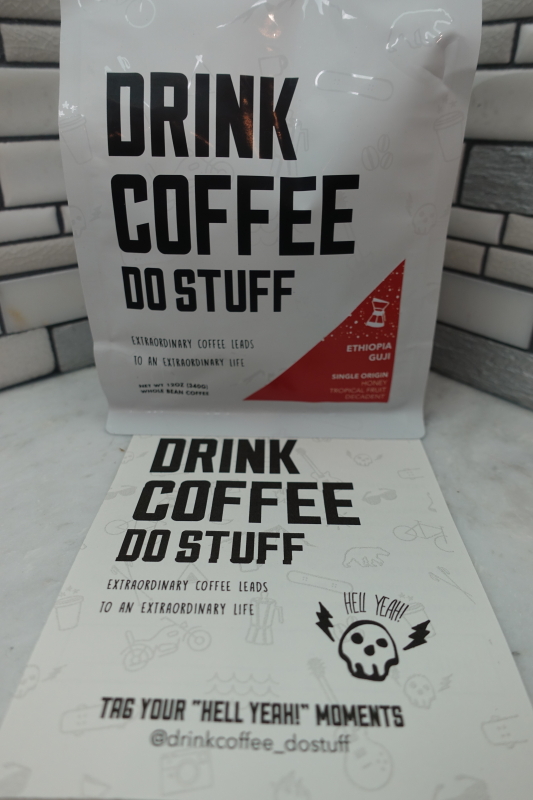
Drink Coffee Do Stuff

November’s Angels Cup comes from a Lake Tahoe, CA roaster called Drink Coffee Do Stuff.  I feel like their website or their motto is like of Coffee x Patagonia.  They seem to be all about the outdoor activity with coffee as the fuel for these activities (which coffee obviously is, duh~).

DSC02079

If you aren’t tired of coffee beans from the Ethiopian Guji region, then here’s another one for you to read.  I’ve noticed that upon opening a new bag of beans from the same region, I tend to smell the same or similar aromas from other roasters.  I’m guessing this phenomenon is partially coincidental since the beans all come from one region. Slight aroma variations exist probably due to the way the roasters are roasting the coffee beans.

Opening the bag, I smell aromas of berries, nuts and chocolate.  Taking a sip of the latte, I’m astounded at the overall smoothness and “drink-ability” of the latte. That first sip envelops my tongue with this berry and nut flavor.  This flavor immediately transforms into chocolate milk.  However, there is this pleasant berry after taste that just lingers at the back of the throat.  Maybe out of habit now, but every time I make my latte, I want to want to savor every drop.


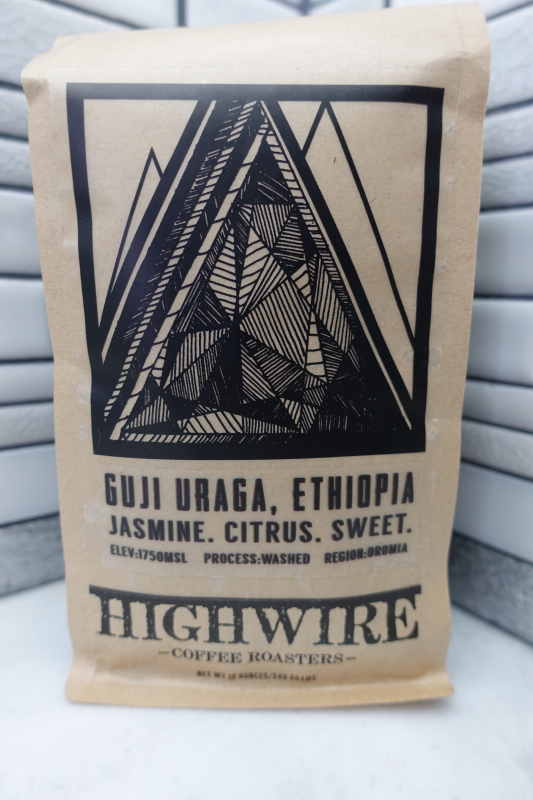
Highwire Coffee Roasters

Not part of my monthly Angels Cup subscription, I stumbled upon Highwire Coffee Roaster on a recent trip to NorCal.  I had a latte and was really impressed at how aromatic and flavorful the beans were.  So impressed I decided to buy a bag of beans. Although they didn’t have the blend of beans that the shop used at the time, I got something that I was pretty familiar with: coffee beans from Ethiopia.

DSC02076

Opening the bag, a nice floral aroma wafts in the air.  Taking a bigger whiff, the earthy nuttiness starts to come through with bits of cocoa mixed in.

So as a bit of an aside, I used to go to Starbucks regularly even when I had Angels Cup subscription.  In my opinion, the minimum a latte had to taste like is Starbucks latte.  Coffee Bean and Peet’s Coffee are too sweet and too bitter respectively.  Anyways, making my latte, the first sip actually pretty mediocre… like Starbucks quality level.  I was disappointed.  However, with subsequent sips, I started to notice more subtleties in the latte.  I get this subtle sweetness that I associate with the cocoa flavors.  The floral, nutty notes are also very subdued.  After making it a few times, I’ve come to enjoy the subtleties in this bag of beans.

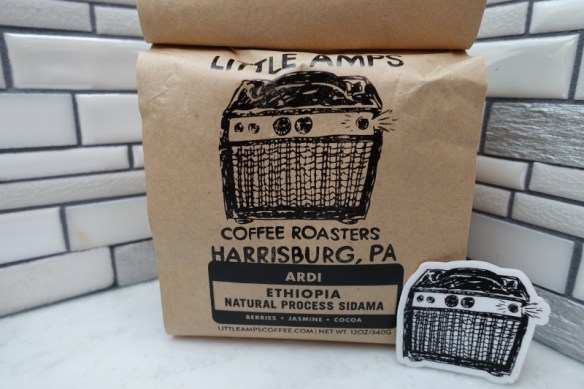
Little Amps Coffee Roasters

October’s Angels Cup comes from Little Amps Coffee Roasters.  It comes from Ethiopia’s Sidama region which I’ve had the privilege to taste beans from in the past.

DSC02077

An aroma of berries and nuts greets me upon opening the bag.  The aroma even after grinding doesn’t stand out that much.  That being said, after making my latte, I was blown away by the taste.  The smoothness of the latte was amazing mixing flavors of berries, cocoa and floral notes.  It’s been a while since I’ve wanted a second cup immediately after the first but it was really that good.

Market Lane Coffee

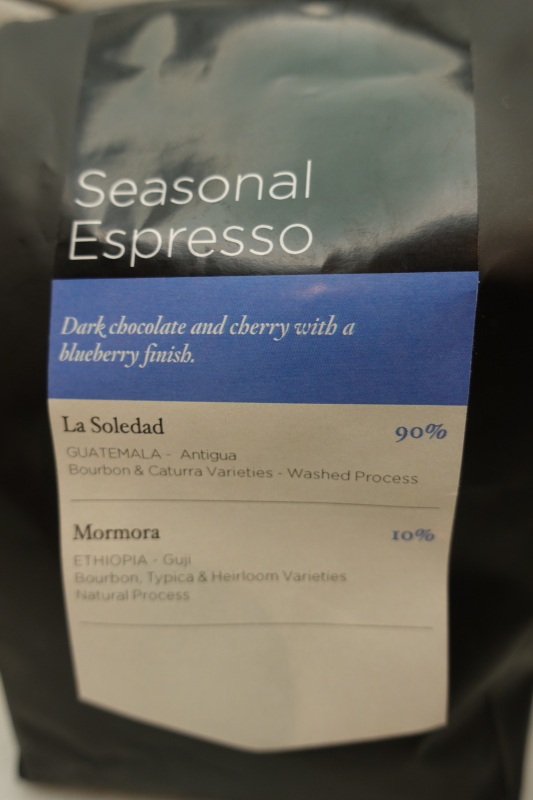
I was recently gifted a bag of Market Lane Coffee coffee beans from Australia.  The bag was a Seasonal Espresso which is a blend of 90% Guatemalan and 10% Ethiopian beans.

DSC02078

I’ve never a blend before.  Upon opening the bag, I was greeted with a wonderful earthy and berry aroma.  There is a faint cocoa aroma intermingling in that aroma.  Grinding the beans releases the cocoa aroma even more.  Interestingly enough, the berry aroma also becomes a much more dominant aroma than before.  I had high expectation for this blend.  But after making the latte, I was a little disappointed.

Tasting the latte, I get strong chocolate milk, blueberry and cherry flavors — exactly as it says in the bag.  I was surprised by the accuracy of the taste.  But I think because of how strong the cocoa and berry aroma was, I was expecting a much stronger/flavorful cocoa and berry taste.  What I ultimately tasted were very subdued flavors where none of the flavors overpowered any of the others.  Perhaps this was purposely done by the roaster?

Don’t get me wrong… although I was disappointed by such subdued flavors, I was happy to try beans roasted from another continent.  It could just how the Australians love their coffee.


Alternative Aeropress filters

About a month ago, I ran out of Aeropress filters.  From the link, the traditional filters were made of paper but before I ran out, I decided that I would go back to a metal filter.  My first metal filter was from the Kickstarter S-filter campaign and that campaign also gave me the Aeropress that I’m still using today.  Although the metal S-filter was nice in minimizing trash, I didn’t like how thick it was.

After some research into the thickness of a metal filter, I had bought two filter replacements that each offered a different way of extracting espresso.
DSC02075

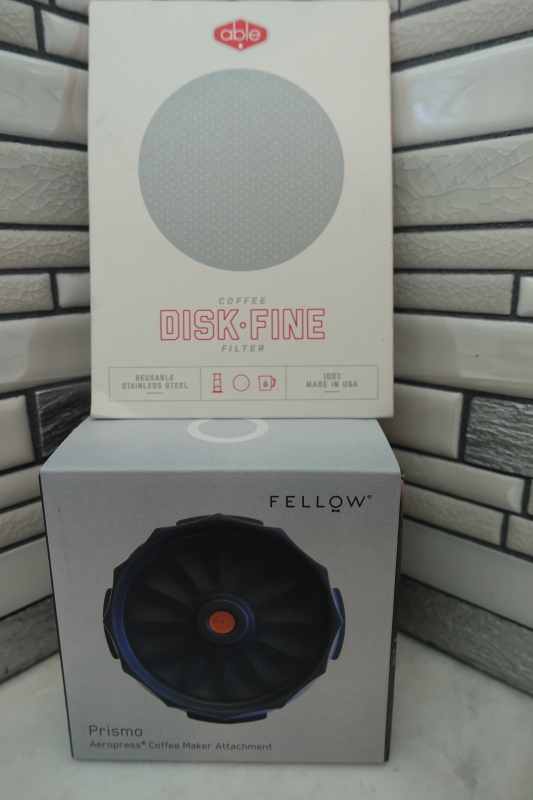
Clearly from the picture, the top is the Able Fine Disk filter and the bottom is the Fellow Prismo.  I didn’t do perform too much of a detailed research into both products.  I knew I wanted a thin metal filter that allowed the perforated bottom to screw on tightly.  The original S-filter was too thick of a filter makes so I found that it was harder to unscrew since I had to screw it on tight to create a good seal.

From a few YouTube videos, the Prismo seemed like an interesting way to make shots as well.  One of the major issues with the normal Aeropress of making coffee was that the coffee filtering into the cup occurred almost immediately after pouring hot water.  An alternative way (which is how I make my coffee) was to invert the Aeropress with the plunger as the “bottom” and mix the hot water with the grinds. Then place the filter/perforated bottom on the top. Then flip the Aeropress into a cup and push down on the plunger to filter the grinds.  The Prismo was designed such that the inversion was unnecessary.  This allowed more flexibility in how much or how little water can be used so as to mimic a true espresso shot more closely.  Keep in mind, the Prismo should be considered an replacement for the perforated bottom/filter assembly.

Overall, I think the Able Fine Disk filter is great.  I did notice a slight difference in taste going from paper to metal on the same coffee beans.  But that’s to be expected since the paper filter tends to trap some of the extracted coffee oils. The Prismo however was somewhat of a disappointment and surprisingly a little more difficult to clean up then traditional metal or paper filters.  The grinds sit slightly offset from the cylinder because of the way the Prismo assembly is attached to the Aeropress.  Taking the filter off in order to save the grinds for composting is a little more work than a regular filter.

Barrington Coffee Roasting Co

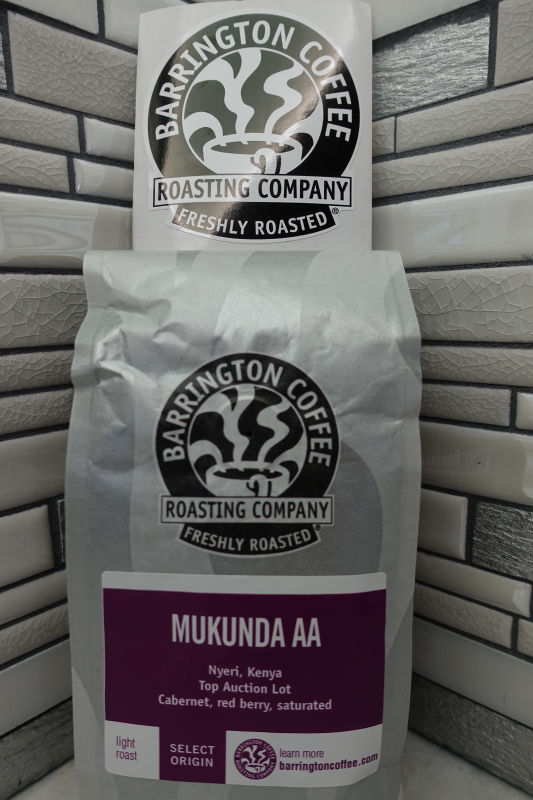
September’s Angels Cup comes from the Barrington Coffee Roasting Company.  I received beans from Kenya this month which is a nice change.  Angels Cup has been sending quite a few coffee beans from Ethiopia these past few months.  Kenya is located south of Ethiopia and is also well known for their coffee growing regions.

The beans come from Nyeri which is in the Central region of Kenya.  Opening the bag, I get whiffs of flower and berries.  There is a weak earthy aroma mingling between the flowers and berries.

DSC02074

Making my latte, I’m amazed at the smoothness of the latte.  There was no acidity, bitterness or sourness. The floral and berry aroma are muted in each sip.  I sometimes think I’m tasting milk chocolate as well.  There’s no toffee/nuttiness either.  There’s a different aftertaste that lingers at the back of the tongue from some of the other companies.  However, it’s hard to describe.

Groundwork Coffee Co

So I ran out of coffee… but the next batch wouldn’t arrive for another week or two.  What do I do?  I go out and buy something on the shelves of the local market. /shock /horror

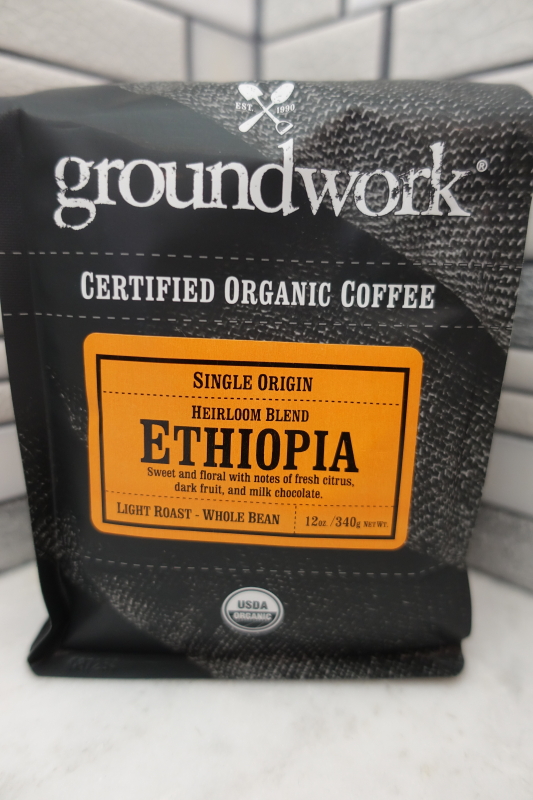
Groundwork Coffee originated from Los Angeles and I’ve always enjoyed their lattes.  Although largely eclipsed by the three mainstream coffee players, Groundwork has held on pretty well to their customers and even managed to expand.  Now that you’ve gotten over your shock, I have the other roaster’s Ethiopian single origin beans in the past.  That was one of the reasons I wanted to try this particular single origin from Ethiopia.

DSC02072

I was not disappointed.  Buying from the market doesn’t seem to have a noticeable effect on the beans’ freshness compared to having beans’ sent directly to me.  Opening the bag, I immediately smell peach, cherry and toffee aromas.

Making my latte, the first sip was amazing.  The latte coats my tongue with this pleasant cherry, toffee flavor.  One thing I found interesting was that the beans have a slightly different taste compared to some of the other roasters for Ethiopian beans.  In the past, the other roasters imparted their Ethiopian beans to have a much nutty and buttery aftertaste.  The Groundwork beans don’t seem to exhibit that taste profile.


Why Starbucks is successful?

This is a fascinating article about differences in tastes based on the different types of roasted coffee and how it relates to Starbucks and their success.

View this collection on Medium.com