It’s an hour long interview with Jeff Bezos covering all things Bezos or Amazon. Hearing his thoughts on these random topics is pretty fascinating.
On YouTube, I saw a Vox vlog about those ubiquitous e-scooters. Vox quickly went into the history of sidewalks and how the sidewalks have ended up in their present day format. Although I agree with the idea of e-scooter startups and their bet on the “last mile problem” in public transportation, I don’t think the solution of “complete streets” is really viable.
Behavior of the masses is hard to change. If people want to drive then they will find a way to drive regardless if there are other viable option. To be honest, I sometimes feel that the 405 expansion seems to have only increased the traffic through the Sepulveda pass.
In my opinion, the most viable alternative would be to convert existing streets into bus only traffic, or add rail lines extending the network of public transportation. And then convert the remaining street space into bike/scooter/last mile alternative only lanes. By eliminating the car lane completely, local/county government are actively encouraging people to walk/bike/run on these car free zones while also promoting the public transportation option. Since the bus-only/rail transit are not competing against car traffic, they should be able to zip through neighborhoods much faster and not be tied up in car traffic jams.
And to be honest, being able to safely bike or even rollerblade from DTLA to SaMo would be legitimately something I want to do.
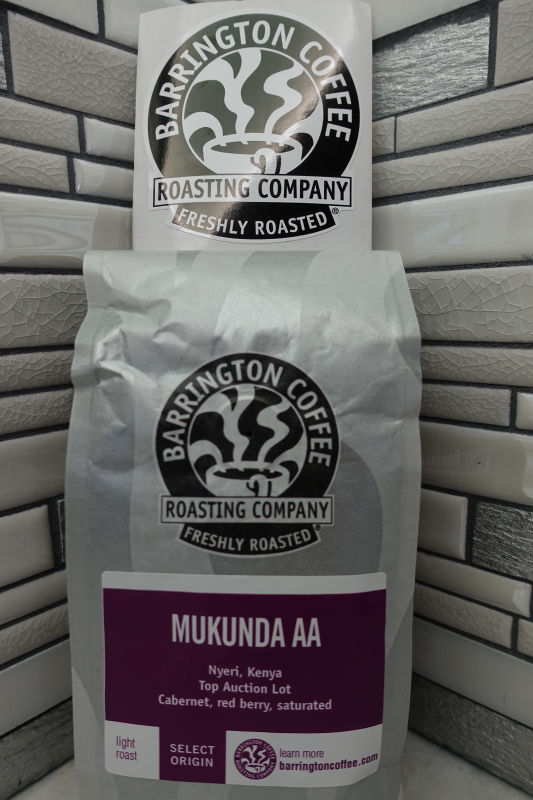
September’s Angels Cup comes from the Barrington Coffee Roasting Company. I received beans from Kenya this month which is a nice change. Angels Cup has been sending quite a few coffee beans from Ethiopia these past few months. Kenya is located south of Ethiopia and is also well known for their coffee growing regions.
The beans come from Nyeri which is in the Central region of Kenya. Opening the bag, I get whiffs of flower and berries. There is a weak earthy aroma mingling between the flowers and berries.

Making my latte, I’m amazed at the smoothness of the latte. There was no acidity, bitterness or sourness. The floral and berry aroma are muted in each sip. I sometimes think I’m tasting milk chocolate as well. There’s no toffee/nuttiness either. There’s a different aftertaste that lingers at the back of the tongue from some of the other companies. However, it’s hard to describe.
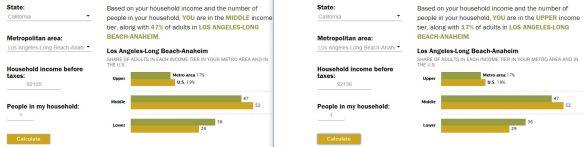
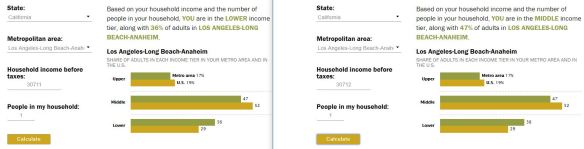
I came across a news article saying that the Pew Research Center had this interactive income calculator to determine if a person is in the middle class. It also compares the government data to the rest of the US population based on the metro area, number of household members and total household income level.
I live in the greater Los Angeles metro. I was a bit surprised to find what the upper, middle and lower income cutoffs were.


In case the screenshot print is too small…
For 1 person household in the greater LA metro, the cutoffs are: Lower < $30711 < Middle < $92135 < Upper.
So I ran out of coffee… but the next batch wouldn’t arrive for another week or two. What do I do? I go out and buy something on the shelves of the local market. /shock /horror
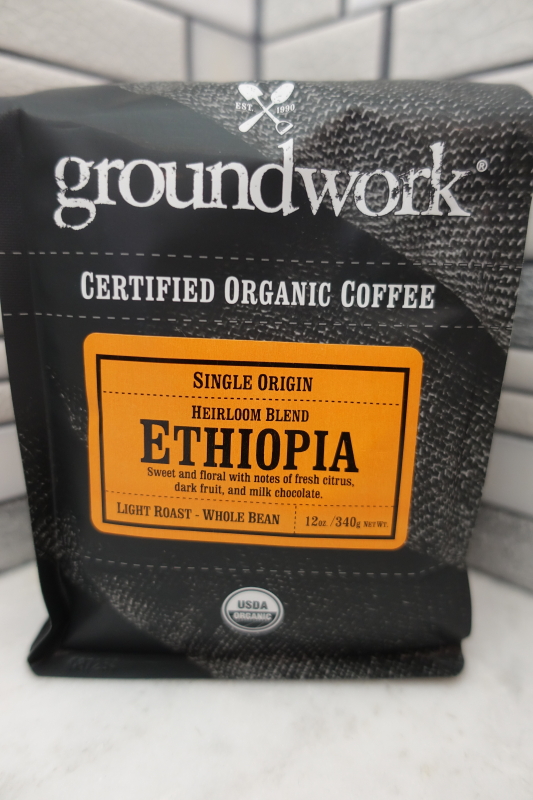
Groundwork Coffee originated from Los Angeles and I’ve always enjoyed their lattes. Although largely eclipsed by the three mainstream coffee players, Groundwork has held on pretty well to their customers and even managed to expand. Now that you’ve gotten over your shock, I have the other roaster’s Ethiopian single origin beans in the past. That was one of the reasons I wanted to try this particular single origin from Ethiopia.

I was not disappointed. Buying from the market doesn’t seem to have a noticeable effect on the beans’ freshness compared to having beans’ sent directly to me. Opening the bag, I immediately smell peach, cherry and toffee aromas.
Making my latte, the first sip was amazing. The latte coats my tongue with this pleasant cherry, toffee flavor. One thing I found interesting was that the beans have a slightly different taste compared to some of the other roasters for Ethiopian beans. In the past, the other roasters imparted their Ethiopian beans to have a much nutty and buttery aftertaste. The Groundwork beans don’t seem to exhibit that taste profile.
A fascinating short read of the history of Chinese food over the recent past two decades. The rise of mainland Chinese cuisine (like Sichuan/Hunan cuisine) is not yet over. With China being larger than US and with “slighty” more people, the number of different cuisines yet to be exported to the US will undoubtedly change the LA Chinese food scene in years to come.
This is a fascinating article about differences in tastes based on the different types of roasted coffee and how it relates to Starbucks and their success.
View this collection on Medium.com
OK… so I finally got around to watching this movie. I have to say it’s such a great movie that stars pretty such an all star Asian cast. That alone makes it worth spending money on. Does it live up to they hype? Mmm… I don’t think so. At it’s heart, it’s a rom-com drama that follows pretty traditional trope story arcs but in a uniquely Asian way. But it did make 34 million in it’s opening week (Wed to Sun). #goldopen

Asians talking about Asian topics.
One of the interesting things they discussed was that Asian-Americans is a broad category that consist of people who come from India, China, Korea, Japan, Cambodia, Malaysia, Singapore, and so on. And… if you even want to go even further, you could have regional specific categorizations as well like in China. Someone from Xinjiang would have a slightly different culture than someone from Guangzhou. I’m sure that’s the case for regions in India or Malaysia too.
I think this is the best quote from the clip.
“You don’t expect one white person to represent all white people.”
So I’ve been watching these foreign Taiwan dramas on Netflix. I’ve noticed an interesting pattern to the story lines. They’re very formulaic that usually try to mimic dating, heartbreak, communication faults and other “real world” experiences. But there’s just one thing that I’m a little amazed that they usually do in almost every show.
That is that in these Taiwanese dramas, many of the characters do their best to hide negative information from the main female lead in order to minimize the female lead’s supposed ensuing heartache/sadness from hearing such information. There is always one main story arc that dances around this negative information and is usually the critical piece of information that causes the conflicts.
Is there an underlying assumption that the female lead won’t be able to handle the information? But then why are the writers making that assumption? Why do the writers think that it’s OK to write a female character who is strong-willed, independent, and compassionate and yet won’t be able to think rationally through such negative information? That confounds me… Is rational communication is ultimately one of the keys to a relationship? If we take dramas as a sort of parable, then one of the lessons from these dramas is that effective communication must be key to successful relationship.