Thoughts on DOJ Breaking up Google

Last month, the news reported that the DOJ proposed to break up Google by “selling” off Chrome and Android in order to “fix” Google’s monopoly on search.

My initial thoughts were the proposed “fix” would have unintended consequences to the consumer and would not truly “fix” the real issue and reason why DOJ brought its case. To my understanding reading through various news sources, the DOJ is rightly concerned about Google’s practices in maintaining “search dominance.”

But let’s take a step back and look at what makes Google good. Back during the beginnings of the internet, I remember using various search engines like Yahoo, Lycos, Altavista, and even AskJeeves with varied success. In testing against Google, these other search engines never offered the link I wanted or satisfied my curiosity as quickly as Google did. That shows how powerful Google’s search algorithm is. Being able to monetize the best algorithm allowed Google to pretty much dominate search competition. Even now in 2024, if I use competing search engines like Bing or Duck Duck Go, Google’s algorithm still satisfy my curiosity by providing the most relevant link within the first five or so non-paid entries. I honestly believe that people will still end up choosing Google because it is a more superior search engine.

Now, back to the case, selling off Chrome would not fix Google’s dominance in search. I imagine Chrome to be more as a vehicle allows access to Google’s search. What the DOJ should instead be asking Google to do is…
1) remove default access to google search.
2) provide users with a choice of different search tools for use.
3) if the user ends up settling on Google Search, then after every Chrome update, the user should be presented with a choice again for different search tool or continuously confirm Google as the search provider.
This sort of solution makes it so that using Google’s search is conscious decision by the user and not some sort of paid default search. Let’s give the users a say in what they really want. With the government not knowing how Technology works, I am VERY pessimistic that they will make a decision that benefits the users.

With Android, to be honest, search is embedded into the OS. As an Android user, it is very convenient to search for things. I think DOJ is on the right track to prevent the auto loading of apps to the OS. Similar to the Chrome solution, Android (if the phone is not a Pixel or Google made/designed phone) should be promoting or letting users choose the various apps for use. They company that is making the phone most likely has their own suite of products that can be promoted. And since Android allows the use of different apps, the user should be given the option on what apps they want to use. Android might need to be fixed such that search is a modular part of the OS and can be interchangeable with different apps.

And finally, to prevent Google from abusing it’s monopoly on search, why can’t a simple rule be implemented that prevents Google from participating or buying its position as the default. Simultaneously there should also be a ban on Google from acquiring any search related technologies or companies. These two restrictions should help small search companies grow and/or at least find some niche market to compete against Google.

Thoughts on a recent podcast

I listen to quite a few podcasts during the week. Many of these podcasts are less than 30min. But I also listen to a handful of long-form podcast. One of those is “The Diary of a CEO.” The host (Steven Bartlett) does a magnificent job interviewing the different guests. Guests range from scientists to CEOs to even ex CIA operatives who offer a wide range of opinions and knowledge. Furthermore, the conversations are fascinating and thought provoking. The podcast also has a Youtube channel if one prefers to “watch” the interview.

Recently, Bartlett had Reid Hoffman (wiki) as a guest (watch here on youtube). Who is Hoffman? He is one of the members of the “PayPal Mafia” but might be more commonly recognized as the founder of LinkedIn.

Now why would I be so interested in even writing about this interview? One of the discussed topics centered around “censorship” and Hoffman’s thoughts about Twitter’s banning Trump (NPR).

But before I get to his thoughts, here are my thoughts about deplatforming in general.
1) One of the reasons America is “great” is the fact that everyone has a platform to speak about any issue and there would be very little retribution (i.e. being cancelled, getting doxxed) for speaking one’s mind. As much as I don’t like hate speech or speech that denigrates one tribe over another tribe, the opinions of the speaker are just opinions. I believe that the speakers SHOULD BE ABLE to speak their peace regardless of whether the speech is truthful, full of lies, full of hate, or flat out disrespectful and disparaging. I still believe that deplatforming Trump was the wrong move.
2) I also believe that ALL SPEECH needs to be monitored to be factual or at very minimum if there are opposing sides/stories that both sides are presented. What you say is what you believe but it might not be correct or factual. And this is where I think speech needs to be monitored. The choice should be up to the reader to confirm if what is stated is factual or not. America needs to raise a new generation of thinkers who should be able to decide on their own what is true and what is false.
3) I also beleive that speech with ANY THREAT of violence should NEVER BE TOLERATED. Regardless of if the THREAT of violence is hinted at, considered subversive or just overt declaration, this type of speech should be taken seriously and action to minimize the threat should be swift.
4) There still is a chance for all traditional and social media companies to “MAKE SPEECH GREAT AGAIN.” First to clearly implement speech policies that strictly forbids threats of violence while also implementing fact checking process on controverisal topics. Second to implement ways where fact checking policies allow readers to decide themself.

Back to the podcast, here’s a shortcut (click here) to Hoffman’s opinion about how speech should be handled. His idea represents a solid middle ground. I am happy that there are others who also believe that it is possible to have a society where speech can be balanced, safe, civil, and truthful. Hoffman goes further with the idea of freedom of speech vs freedom of reach and how differentiating between the two benefits society. Even contrarian and/or unpopular opinions should be heard by society, explored and thoroughly investigated by society, and then confirmed or debunked by society.

After thinking about this for the last few days, I pose this question to readers: Would a society that participates in the type of civil discourse (as imagined by Hoffman) become a better society overall?

AMERICA, DO BETTER!!!

It’s been over a week since Trump was projected to be re-elected. I’ve had conversations with friends about this and I thought I’d put my thoughts on paper.

First, I was raised to be respectful, to be honest, to speak the truth, to live a life of integrity and most importantly to strive to be a morally good person. I would never support Trump because Trump INVALIDATES everything on how I was taught and raised.

Supporting Trump and the “Trumpublican” party, you are invalidating these ideals of being respectful, being honest, being truthful, living with integrity and being a morally good person. By supporting Trump and the “Trumpublican” party, you are signaling that you accept the discord and strife that Trump and his echo chamber of Fox News/Tucker Carlson/Steven Miller/Steve Bannon/etc has brought to society. By supporting Trump and the “Trumpublican” party, you are signaling that you admire someone who lies constantly, someone who is seeking to benefit himself and his brand, and someone who is a rich narcissistic convicted pussy grabber.

I cannot support Trump because of his behavior and everything he represents goes against my own moral compass. I want to know the rationale of why someone raised to be honest, to be truthful… would want to vote for Trump. Is this what these 76M AMERICAN voters really want to idolize?! A narcissistic lying self-serving convicted pussy grabbing president?

Second, it’s frustrating to know 76M Americans support a lying toxic bastard… who openly calls to have his opponents shot for opposing him… who openly degrades, disrespects and bullies people… Who only seek to benefit his business/brand… Who isn’t a president I support.

Up until the 2016 election, I had always believed that the President of the United States needed to represent someone who can show the rest of the world how great America is… Someone who after the election isn’t mired in pettiness… Someone who wants to see and lead a freer, safer, richer US. Trump did none of that in his 1st term. And Trump’s 2nd term will be at best more of the same… At worst will be regarded in history as a dark 4 years.
If Trump gets his way with Project 2025, Americans will lose… Not immediately but Americans will lose their future. Americans will bear the brunt of his tariffs, leading to increased prices because companies pass on the cost to consumers (us). Americans could very likely lose even more rights over their own bodies. Americans will face an even larger police state all to “keep immigrants out”. The idea of a “blind justice” may be gone with the Trump administration actively pursuing people who oppose Trump. And protecting the environment will probably be an after thought.

Third, here’s a post election observation…
1) where are the claims that there’s “massive voter fraud” ?
2) where are the claims of a “rigged election”?

Here’s a secret…. There never was massive fraud and election rigging to begin. In 2020, Tump and Trumpublicans being the sore petulant losers that they are spread rumors about rigged elections and voting fraud. Yet when they win in 2024, the Trumpublicans magically trust the election system. That just means that the 2020 results never was about “massive voter fraud” or “rigged election” but a sore loser whining. Now that I think about it… Being able to whine and not receive any repercussion….. That’s called privledge.

Here’s a question… after spending YEARS denouncing the government, are Trumpublicans now going to ask the public to “trust the government”? If so, it just means that Trumpublicans cared only about winning at all costs... even going so far as denouncing their own government report as well as breaking govermental norms. I would propose that breaking of norms escalated when McConnell wouldn’t even allow the Senate to entertain any hearings for SCOTUS nominee (Merrick Garland) during the 2016 election year while expediting another SCOTUS nominee (Amy Barrett) was quickly ushered in 2020 election. This winner take all attitude leading to strife and discord only energizes Trump even more.

Fourth, I’m curious how many people voted. As of 13NOV2024, according to CNN…
2024: 76M Trump vs 73M Harris
2020: 81M Biden vs 74M Trump
2016: 62M Trump vs 65M Clinton
2012: 65M Obama vs 61M Romney
2008: 69M Obama vs 59M McCain

Here’s a conspiracy theory of voter repression… where’s the missing 8M Biden Voters?

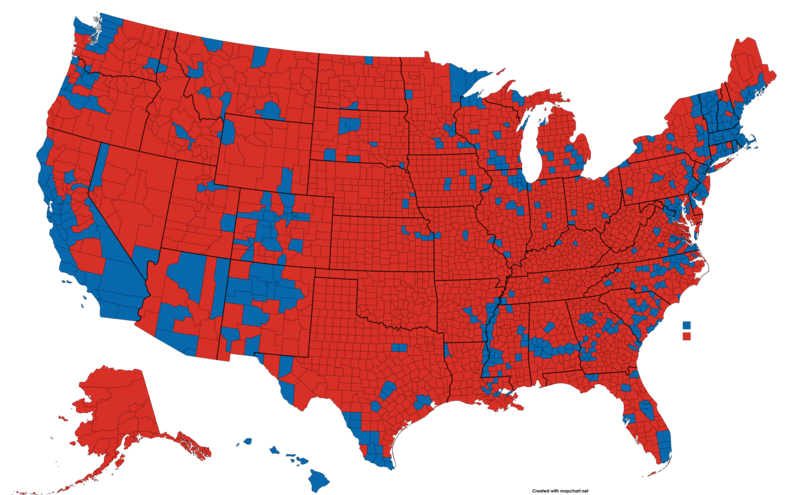
Fifth, this whole concept of “rigged election” really got me thinking. Listening to various politics podcast, there’s been a lot of discussion around legislative and congressional/electoral maps. I’ve learned that different states implement different methods to draw these maps and the the majority of the maps that are drawn are generally gerrymandered to favor Republicans or Democrats depending on the state. Else the maps are drawn by an independent commission which might also be subject to influence by Democrat or Republican leaning members. I’ve also learned that Republicans have been making pushes to control the state legislature over the past two decades. Looking at the overall US 2020 electoral map by county (below), it’s not hard to see Democrats are populated around major cities and along the coasts. But every where OUTSIDE the cities is predominantly Republican. Thus a majority of the states are Republican strongholds. So by saying it’s a rigged election, Trump is actually right. The Republicans have rigged the electoral maps to win. So if they don’t win, then something broke the rigged system. How’s that for conspiracy theory!?

From Wikimedia Commons (https://commons.wikimedia.org/wiki/File:2020_Election_Results_Map_by_County.png)

And finally, the last thing I can really think of is this…

AMERICA,
(WE CAN) DO BETTER!!

Real Life Lessons

Earlier this year, I’ve learned some valuable lessons related to home care/home improvement.

The water company came to fix/maintain a Reverse Osmosis (RO) drinking water system. Unfortunately, they were unable to fix a check valve (replacement no longer available for that particular RO system) and instead a brand new RO system was installed. After the install, the RO system operated normally and water flowed through fine without visible leaks. Because of personal issues, I had to leave for a few days. And since there were no visible leaks, I left thinking everything would be OK.

The install WAS NOT DONE properly and this would be the start of a 4 month long headache. What happened was that a connector/valve near the spigot underneath the sink was not properly screwed on tight enough. Because of how the RO system works, a leak at this area would not have been noticed until enough water had been stored in the RO reservoir and the back pressure generated would force water through the weakest link instead of the waste line. In 48 hours of not being at home, enough water had leaked out such that my downstairs neighbor called me to inform me that there was a pool of water forming in the ceiling above their kitchen. Because our layouts are similar, I knew immediately that there was a leak from the water system.

Coming home, I stopped the leak immediately and then worked to dry out the area. Overall a portion (30%?) of the hardwood floor was affected by the water leak. The water flowed underneath the raised cabinets to the back of the kitchen wall where it flowed downstairs to the neighbor’s ceiling. The kitchen sink was also damaged with both the back wall and floor board soaking wet. Since the damage has been done, my first and only thought was the potential mold growth and how to mitigate it. Even though the hardwood floor however looked undamaged, I was still afraid of any sort of mold growth. Because of the personal issue, I didn’t have time to research about the relationship between water damage extent, mold growth, mold mediation methods on hardwood floors, and other topics of interest. In my head, all I can focus on was potential mold growth and needing to mitigate it at any cost.

Calling a 3rd party that specializes in mold and water mitigation, I hired this company (let’s call them MV Constructors) to do this work. They inspected and found water damage both in the kitchen floor AND also in the floors on the other side of the kitchen. They then brought in dehumidifiers and fans to start drying out the hardwood floors. Then they started work. They ripped out both the kitchen sink area, a small portion of the hardwood floor in front of the sink and then a huge swath of the hardwood floor on the other side of the kitchen which was the living room. At least the cabinet doors were saved.

First Lesson: I should have MONITORED MV Constructors’ work. In retrospect, I should have actually asked WHAT they were going to do so I have an idea of what the damage will be.

Second Lesson: I should have asked to see the extent of the mold damage so I can assess if there was enough damage to before letting them tear apart the hardwood floors especially in the living room. Apparently there are ways to treat mold on hardwood floors without having to demolish the floor.

Third Lesson: These types of companies (like MV Constructors) that have both mitigation and rebuilding sub-companies tend to tear down and rebuild assuming that insurance will pay for it.

Now with a swath of missing flooring in the living room and a partially functioning kitchen with partially missing flooring, I had to fix this damage. MV Constructors brought out their main builder and he proceeded to just list out what needed to be fixed… tear out and replace the rest of the living room and hallway hardwood floors, tear out and replace the kitchen hardwood floor, remodel the kitchen, and redo the flooring of the laundry nook. Did he listen to me? maybe? But in retrospect, he was more or less banking on the insurance payout. My neighbor downstairs got a strange vibe off him and it turns out this builder was charged for fraud. If having personal issues wasn’t enough, now someone coming in wanting to just redo my whole living space seems a little extravagant. I opted to not go with him.

Fourth Lesson: Always double check references.

All throughout this process, I knew I was stuck in a bad mental place. In my head, I kept churning over how this should have been preventable, or how if I just went back for one night it would have been caught, or if I just turned off the water source because I didn’t have time to really test the RO system. And then as I did more research, I started to realize that the amount of demolition the company did WAS NOT needed. I also started churning over the fact that I should have monitored their work, or asked for a step by step process on how they are going to proceed. With every new information I found about water damage, mold damage and related topics, I realized how naive I have been and that just continued to churn in my head.

Fortunately, when I thought about ways to fix this damage, I became unstuck from this bad mental state. I began thinking of possible ways to fix the damage and looking to the future help me a lot. Kitchen ideas were straight forward. They include building a shelf underneath the bar height eating area or even a full kitchen remodel. Flooring was the biggest headache since both the kitchen and living room floor needed to be replaced. However, having to tear out almost 700+ sq ft of good hardwood floor in order to “fix” 100 sq ft of seems a little ridiculous. I ended up focusing on flooring ideas that just fixed the damaged portion. Ideas included tiling both damaged living room portion and the kitchen as well as more “simpler” ideas of salvaging the kitchen hardwood floor pieces and transfer them to the opposite side in order to preserve the “look”.

In the end, a trusted general contractor rebuilt everything. The kitchen was put back as is as I was able to buy replacement sinks cabinets from the original makers of the cabinets. The kitchen hardwood floors were salvaged and transferred to the living room in an attempt to preserve the overall “look” of hardwood floor. There is a visible cut line where the demolition occurred to remind me of how naive I was. The kitchen was tiled.

Fifth Lesson: When ordering custom built items, be as specific as possible. One of the cabinets should have had a shelf in the middle, but I assumed the company knew what I wanted. However as I found out when I picked up the cabinet, I never asked to have a shelf pre-built into that cabinet and hence they built it without a shelf.

All this time, I also had to deal with insurance. Fortunately, the insurance accepted the MV Constructors claims of mold/water mitigation costs. They also paid out the estimated cost for rebuilding the damage less deductible. Additionally, insurance accepted the liability claim for downstairs and also paid that out in full.

Overall, the repairs took about 4-5 days and for much less than the insurance payout. When I looked into this discrepancy, the majority of the repair cost involved replacing the hardwood floor for the living room and hallway whereas we opted to just transfer salvageable hardwood floors.

Live and Learn.

2023 Lifestyle Observations

As a follow up to my previous 2023 updates, I’ve noticed that these frequent fasting has limited my cravings for sweets significantly. In the past, I would crave ice cream, chocolate or sugary drinks to satisfy a sweet tooth. And then feel horrible. Nowadays, I realize that fasting has almost eliminated these sweet tooth cravings. That is not to say I never eat sweet food. Whenever I feel mentally tired or exhausted from work, I shift my mental mood by ordering a Starbucks double blended caramel frappucino with an extra espresso shot, and extra caramel sauce and no whip cream. The break from work and enjoyment I get from such a huge sugar rush puts me back into a relaxed mood to continue working.

Something odd that I’ve also noticed is that whenever I eat a steak, I feel the urge for carbonated drinks. When that happens, I’ll drink a Coca Cola or Bundaberg Ginger Beer. Other times, I may drink a non-sugary option like Sanzo. The yuzu and mango flavors are great. I still haven’t figured out why eating steak will elicit a desire for carbonation. I think though it might actually be more of a reaction to eating something fatty/greasy. Sometimes eating meals rich in protein and fats also elicits this same type of craving.

I am also finding that another fasting benefit is a potential reset to the balance of competing hormones such as Ghrelin vs Leptin and Insulin vs Glucagon and even other hormones like Peptide YY, Cholecystokinin (CCK) and cortisol. I’ve noticed that I don’t get hungry as often. I generally will end up eating some fruits (oranges) and/or vegetables (sliced cabbage) for dinner to minimize any hunger. I’m working towards not eating so to extend fasting time in between meals.

Watching youtube influencers on fasting like Dr Fung, I think I should plan on having longer term (up to 72 hour/ 3 day) fasts in order to be more in the fat burning mode. I think that actually is possible now that I’m used to 36-40 hour fasts. What’s another 24hour right?

2023 Updates to Lifestyle and Exercise

As mentioned in the previous post, I put together the past experiences into a sustainable lifestyle listed below. I’ll rotate through this regimen for about 8 weeks then take about a month to stabilize the weight.

Monday is my fasting day. I drink water, tea and coffee on this day. And if needed, I’ll add mineral supplements to the water to minimize any “fasting headaches”. This fast usually lasts goes on for about 36 hours. It starts Sunday after my last meal (either lunch of dinner).

On Tuesday, I break my fast around lunch. Lunch is prepared ahead of time in pre-cooked portioned out containers. I scoop a serving of protein and 1 or 2 servings of vegetables into a separate container for lunch at work. Sometimes, I’ll bring fruit as well for lunch “dessert.” For dinner, I’ll generally eat a much simpler meal (home made chicken/beef bone soup or simple to cook vegetables or fruit) else not eat at all. I have found that fasting has curbed my appetite, controlled sugar cravings and shrunk my stomach capacity. So when I’m not hungry, I’ll skip dinner.

On Wednesday and Thursday, my lunches are generally the same as Tuesday. On Thursday, it can vary more since the pre-cooked portioned containers might have already been finished. I may sometimes have to prepare some additional vegetable sides for lunch. I’ll also transfer a steak out from the freezer into the refrigerator to start defrosting to be eaten later on Friday or Saturday.

Friday lunches generally consist of finishing the last bits of pre-cooked food. If there’s no more pre-cooked food, I’ll generally just cook my own. If I feel like having steak for dinner, I’ll hold off on eating lunch and have an early dinner instead. Instead, I’ll pull the steak out from the refrgierator, season it and leave it outside to for it to come up to room temperature. I’ll also take out some frozen veggies to eat with the steak.Saturdays are to satisfy any cravings I may have during the week.

Saturdays are also when I try to arrange to have lunches/dinners with friends. If I have no other plans, I’ll take out the steak from earlier this week to salt and cook for dinner.

Sundays are family lunch/dinner days. If lunch happens to be big, I’ll skip dinner.

For exercise, I play approximately an hour of squash 4 days a week. On days where I work from home, I’ll take at least a 20-30min walk around the neighborhood during the day. This helps clear my head from any work issues. I admit that I was consistently inconsistent with resistance training with my 25lb kettlebell and calisthenics (body weight) exercises like pushups, burpees, situps and . At least once a week, I’ll do kettlebell swings, kettlebell squats, bicep curls and standing overhead press. For 2024, I plan to focus more on resistance and calisthenics.

2023 In Review

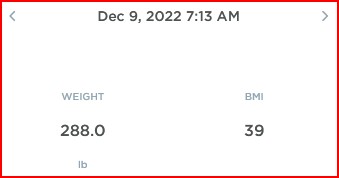
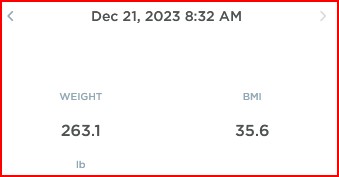
Another year has passed. Unlike previous years, the most important goal I set for myself has been a success. I started 2023 with a goal to discover and implement a sustainable, consistent lifestyle of eating mostly whole foods while limiting food cravings to just once a week. In previous years, I’ve tried various diets (intermittent fasting, keto, low carb) and lifestyle changes (mainly exercise more, more weight training, go to bed earlier) always with limited success (maintain weight or lost weight only to gain it back). Through these past experiences, I’ve learned what kind of eating works and doesn’t work for me, what “full and just right” feels like for me, and more importantly what are the underlying thoughts, mental patterns and impulsive habits that can sabotage progress by reverting back to the norm. This year I was able to take the past successes and other lessons and put together what seems to be a sustainable lifestyle. As a result since the start of 2023, I’ve lost 20lbs (again).

Going into 2024, I plan to continue and improve on this lifestyle.

How did I even reach this state? Unfortunately, much of the weight gain over the past few years have been due partially to COVID-19 lockdowns where minimal exercise while maintaining the same eating habits really packed on the weight. During this time, I had a chance to really focus more on the diet aspet (and less on exercise aspect) to lose weight. Identifying what type of foods, the variety of fodd, and how much and how frequent I ate helped lead me to where I am now. Ultimately, this 2-3 year time frame helped me see and adjust to a healthier diet lifestyle.

I’ll document my “lifestyle” in a separate post.

Thoughts on US vs Amazon Trial

The FTC is out for blood! First Google and now Amazon. My understanding of the case against Amazon is that Amazon has become a monopoly and abused it’s market leading status to maintain dominance and hurt the competition.

I will say that I use Amazon frequently. I used to be an Amazon Prime member but I opted to stop membership because I didn’t see any additional benefit. The 2-day shipping was a nice benefit, but with careful planning normal shipping was equally acceptable for me as well. Plus, by going with normal shipping, it not only broke the vicious dopamine reward cycle of buying and getting packages practically next day but also saved me more money since I had to think about whether or not I really needed that item. Plus, many of the percieved benefits to Amazon Prime were “Nice to Have” for me. So I cancelled membership.

Over the years of using Amazon, I have two major issues with Amazon. First, Amazon allows any/all vendors who wish to sell goods. So many of these goods tend to be low priced items from OEM manfuacturers in China that US companies source to get their goods from. What ends up happening is there are multiple “knock offs” of a similar US brand/model that flood the market. With so much choice, it’s hard to even know what to buy because sometimes the Chinese made products by these OEM manufacturers are worse than the OEM manufacturers with US partners. I try to support American companies selling through Amazon but it’s tough trying to find a proper product. Second, Amazon using customer data to also get “in on the market.” Over the years, I’ve noticed Amazon selling their own “Amazon branded” merchanidse whether it’s clothes, office supplies, common electronics and even food items. Amazon’s participation in this market pushes out the small business owners.

I believe Amazon should have a duty to promote US owned and operated companies. Companies should be forced to have a presence in US and pay US taxes if they wish to sell to US consumers. I also believe Amazon should NOT be participating as a seller competing against the other small business owners. I think it’s great that Amazon provides a platform to the business owners seeking an e-commerce revenue source. I also think it’s great that Amazon even provides the inventory and supply chain logistics for small business owners. And in return the business owners pay a fee. However, does Amazon currently pay a fee to itself to store, list, pack Amazon branded products online? I’d be curious to know.

I think Amazon is marching slowly towards a vertical ecommerce integration. First they have the Amazon ecommerce platform. They also built and market their own server and hardware services for other web based platforms. Then they introduced to small business owners the ability to maintain inventory without the warehouse overhead AND also introduce logistical/supply chain management by packing/shipping products to customers. Then they expand into making their own brands of customer goods from clothes to food to electronics. Although Amazon probably will be unable to own manufacturing companies, Amazon’s sheer size allows them to control the manufacturers. Then utilizing the ecommerce platform, inventory management and supply chain logistics, Amazon can easily outsource, outcompete any small business owner.

My solution to Amazon’s problem would be
!) Amazon should just be forced to ONLY provide the tools for ecommerce and not be allowed to participate in it. I believe that will be good for small business competition and is in line with US’s view of “capitalism.”
2) Amazon voluntarily requires foreign sellers list their US base of operations to ensure US taxes can be paid. It woud not affect current US business owners selling on Amazon nor would it affect US owners thinking about selling on Amazon. This requirement would then force foreign OEM manufacturers to spend money/time/resources on establishing an office in US so that taxes can be paid to local, state and federal governments.

Biden’s College Loan Debt Forgiveness Plan

If you haven’t heard, President Biden plans to go forward with plans to forgive up to $10,000 in college loans for individuals making under $125,000 a year. Obviously there are specific rules a debtor will need to follow in order to take advantage of the loan forgiveness. Reading through the articles, there are clear lines of political division masked behind the “concerns of the national debt/fiscally irresponsible”, “unfairness to those who have already paid”, and “increasing inflation”. Let’s breakdown some of the arguments as I see it.

1) Concerns of national debt. I find this argument inherently flawed. Both political sides have used this argument when the other side has been pushing a spending plans. Republicans criticized Build Back Better. Democrats criticized Trump’s Tax Cuts and Jobs Act. They clearly can’t be right and the criticisms from both sides are just smoke screens to confuse the voters.

Ultimately, voters really need to think about what kind of “national debt” is considered good debt. Using a line from advocates of higher education, taking on debt in order to obtain more schooling is good. The idea is that education will result in higher wage increases and overall higher wages making the debt more as an “investment” in the future. If voters are to also consider this “investment” hypothesis and apply to the national debt, what sort of programs are appropriate then for US to incur any sort of debt?

I personally believe investments in infrastructure, education and healthcare are critical for the future of US. These kinds of investments will undoubtedly payoff in the future (whether 5 years or 50 years) benefiting American people. Even just around infrastructure, did you know that US has an overall score of C- (https://infrastructurereportcard.org/). With tragic issues like what happened with the Flint water crisis, and even the current crisis in Jackson, MIssissippi, infrastructure improvements should be one of the top items on every American’s list. Improvements to fix/update highways, bridges, internet, electrical grids, water systems, sewage systems, etc… are critical since they are used everyday by millions of Americans.

With education, teaching future generations the skills needed is critical. It’s not just the advanced skills from “STEM” majors (aka science technology engineering mathmatics) but also the basic building/trade/technical skills that support every day life (carpentry, electrian, mechanic). Education helps maintain a bustling economy. Unfortunately, the emphasis on “advanced” skills seems to outweigh any thought about the basic trade/technical skills. It doesn’t matter how skilled a brain surgeon might be at the operating room table, if the hospital is not built correctly or wired correctly, or if the mechanic does not fix the surgeon’s car correctly…. that surgeon is useless to society if something happens to the building, or operating room or even his car.

And finally, healthcare is also critical to the future of US. By guaranteeing the right to a minimum standard of healthcare, the US government can ensure a standard of living for generations. If the government were to either set a minimum standard OR provide the minimum standard of healthcare, American’s would have access to yearly general check ups which would also provide a benefit of potentially spotting future health issues ahead of time instead of having to require ER visits to handle sudden (potentially preventable) medical issues. How can a “1st world nation” really say they are “1st world” when so many rely on ER visits for healthcare?

2) Unfairness to those who have paid. Why wasn’t this argument used when the US bailed out the banks and the automobile companies during the start of the great recession? If the US government can “pay” to save corporations, why can’t the same US government that “WE THE PEOPLE” created also “pay” the debts of students?

Back in the 2008, depending on the various sources (MIT, Wiki, Rolling Stone, Balance) the US government ended paying anywhere from a minimum around $500 BILLION to over $7 TRILLION. Assuming the numbers are accurate, the reader should be reminded that the $500Billion (minimum) went to corporations. At the same time, the American dream of owning homes were being shattered by foreclosures, under water home values and personal mortgage debt. American people were literally being ignored because the government made some calculation that certain financial institutions were just “too big too fail.” Hypothetically if the $500B were to have been distributed to the approximate 300M US citizens, each citizen would have received approximately $16,700.

With Biden’s loan repayment, eligible debtors would receive $10,000. Again depending on the various sources (CNBC, Daly Caller), the US government would be paying around $330 BILLION. The payment would only target a small subset of the US population based on the criteria set by the administration. At the very minimum some 20MILLION borrowers would now be debt free and be able to divert the loan money towards some other debt or future savings. That’s 20 Million borrowers who might now be able to stop living “pay check to pay check” and be able to have the ability to plan a more financially secure future.

3) Increasing Inflation. To be honest, I’m not sure how a sudden $10,000 deduction from a balance would affect inflation. Many borrowers are only putting $300-$1000 towards their debt on a monthly basis. At most the borrower will now have an extra $300-$1000 to spend on other debt or towards something important/necessary (maybe fix a car? or emergency fund?) I don’t think the extra money will lead to the increase in inflation so suddenly. I feel like pundits talk about the $10,000 as if borrowers are going to go somewhere to spend all $10,000 at once irresponsibly. Please let’s give the borrowers some credit…


Overall, I think Biden’s Loan Debt Forgiveness Plan is great. However, I think the amount of $10,000 is too much all at once. A more reasonalbe alternative would be $5,000 to knock off the borrowers balance. I also agree with the income restrictions qualification as a way to limit high earners from this program. In my study of American history, I’ve realized that America generally rewards or favors people and corporations through various financial benefits such as tax cuts, tax incentives, and even tax loopholes. Biden’s plan is one of those rare plans that try to help the common American citizen. What’s not to like about that?

Did the California DMV get hacked?

I don’t understand why the California DMV OTP challenge page to confirm my “identity” is in Chinese. Did they do some sort of upgrade and failed to keep the OTP challenge in English? Or… Did they get hacked? When a US or state goverment system goes to some foreign language page… it doesn’t really boost the confidence in that web page.

The DMV page also made it difficult. I could not contact a service representitave nor a technical representative to ask about the validity of this OTP challenge in real time. The chat bots are UTTERLY useless. I ended up having to ping them on Facebook and Twitter… but of course… tech service isn’t available their either.